The Art of Analog: Why Hypercar Collectors Crave Mechanical Purity
In an era of digital dominance, collectors are turning back to the visceral, unfiltered experience of manual hypercars. We explore why the analog soul remains the ultimate luxury in modern automotive engineering.
November 13, 2026
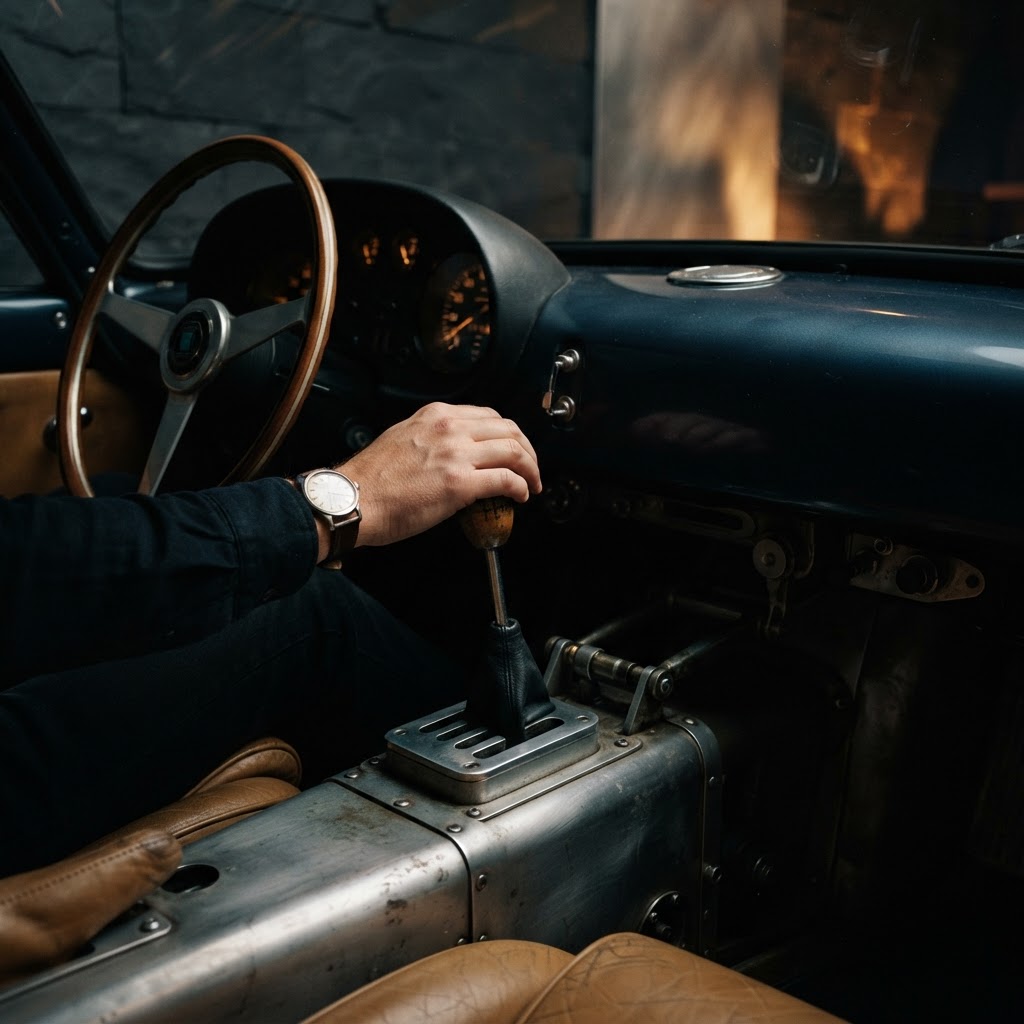
Modern hypercar design is increasingly defined by complex software, autonomous assistance, and electrification. While these advancements push the boundaries of performance, a discerning group of collectors is recalibrating their focus. For these enthusiasts, the zenith of luxury is no longer defined by how many computers manage the vehicle, but by the absence of them. The resurgence of interest in manual, analog hypercars like the Gordon Murray Automotive T.50 or the PAGANI Zonda is not a rejection of progress, but a conscious curation of intimacy.
Driving an analog hypercar requires a different kind of mastery. It is a dialogue between machine and driver, unfiltered by traction control or rapid-fire dual-clutch systems. When you sit behind the wheel of a naturally aspirated V12, hearing the mechanical resonance of the intake and feeling the weight of the clutch, you are not merely transporting yourself; you are participating in a kinetic ritual. In Vienna or through the winding passes of the Austrian Alps, the connection to the road becomes absolute. The machine does not anticipate your desires; it waits for your input.
This trend represents a philosophical shift in high-end collecting. For years, the market prioritized output figures and lap times. Today, the metric of value is shifting toward emotional engagement. Collectors are seeking vehicles that offer a tactile feedback loop—a steering rack that vibrates with every nuance of the tarmac, a throttle response that is instantaneous, and a gearbox that demands precise, intentional movement. It is the automotive equivalent of choosing a mechanical watch over a smartwatch; one provides data, the other provides history and mechanical poetry.
At Black Label Motors, we have observed that our members are increasingly looking for cars that offer a 'purist's spec.' They want the lightest chassis, the most visceral engine configuration, and the fewest digital interfaces. This move toward simplicity is the ultimate expression of exclusivity. It suggests that the owner has nothing to prove in terms of technology, but everything to gain in terms of experience. As we look ahead, we anticipate that the most coveted machines will be those that preserve this analog heritage, serving as reminders of a time when the driver was the final arbiter of performance. In a world of noise and automation, the quiet, precise mechanical feedback of a true driver’s car is the greatest luxury of all.