The Silent Revolution: Bespoke Engineering in Modern Hypercar Design
We explore how the fusion of artisanal craftsmanship and cutting-edge aerodynamics is redefining the ultra-luxury driving experience. Discover why personalization has become the ultimate performance metric for today's elite collectors.
October 02, 2026
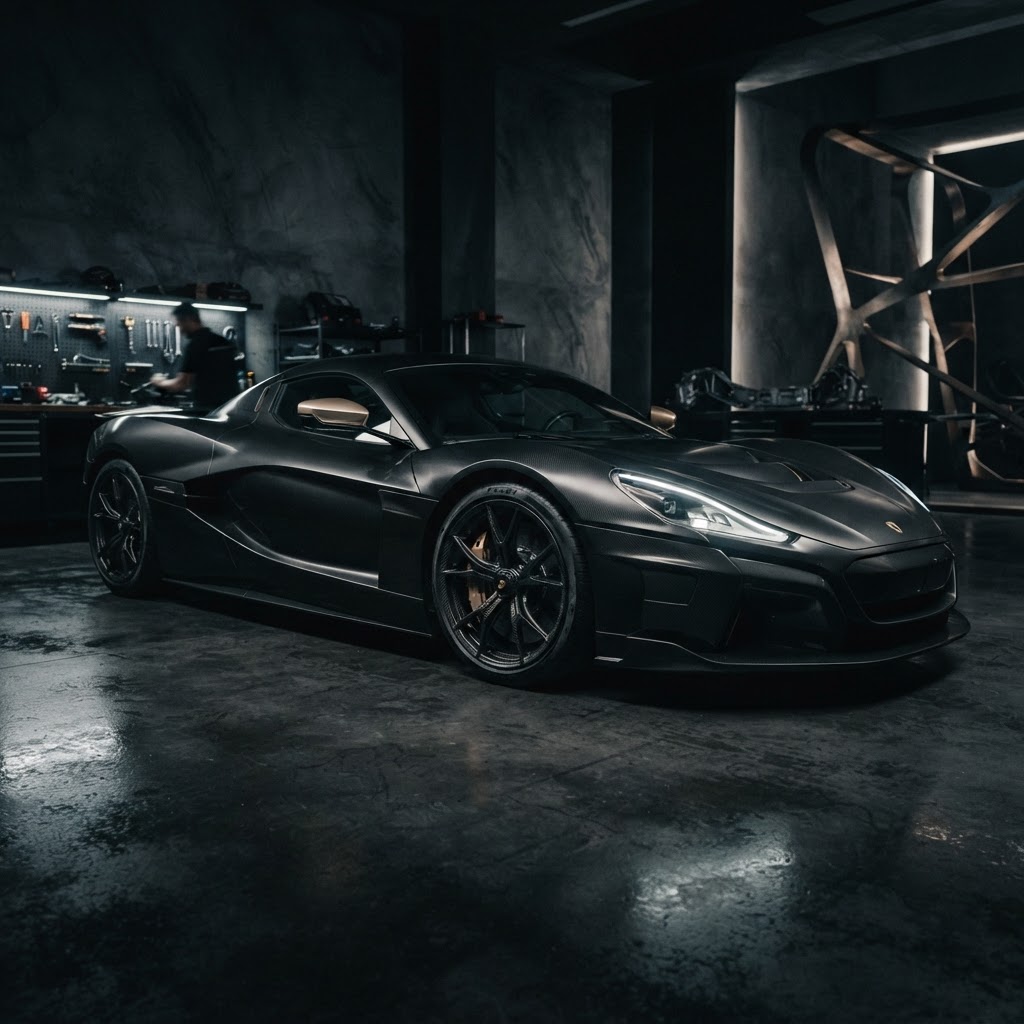
In the rarified atmosphere of hypercar manufacturing, the traditional pursuit of raw horsepower has begun to yield to a more nuanced objective: the total integration of driver and machine. At Black Label Motors, we observe a distinct shift among our members. While the Nürburgring lap times of a Rimac Nevera or the raw visceral power of a Bugatti Chiron remain benchmarks of engineering, the true frontier of luxury mobility now lies in the bespoke personalization of the tactile experience.
Design houses like Pagani have long understood that a hypercar is not merely a vehicle but a gallery piece. Horacio Pagani’s obsession with the 'Leonardo da Vinci' philosophy—the intersection of art and science—has set a standard where every carbon fiber weave must be aligned with mathematical precision. This is no longer just about aerodynamics; it is about the symphony of materials. From the tactile resistance of machined titanium switches to the scent of hand-stitched Connolly leather, the modern collector demands a level of detail that rivals the ateliers of Place Vendôme.
Consider the recent move toward lightweight, high-tensile composites. As we move away from the weight penalties of earlier hybrid powertrains, manufacturers are finding ways to hide complexity behind minimalist aesthetics. The cabin of a modern hypercar has become a sanctuary of solitude. Soundproofing technology, originally developed for private aviation, is now being subtly integrated into chassis design to filter out road noise while preserving the authentic, raw soundtrack of the engine. It is a balancing act of silence and aggression.
Moreover, the rise of client-led design programs—such as those offered by McLaren Special Operations or Ferrari’s Tailor Made division—reflects a departure from mass-produced exclusivity. Collectors are now deeply involved in the development phase, selecting custom hues that mimic the finish of natural minerals or requesting cabin layouts tailored to their specific ergonomic preferences. This shift suggests that the future of the industry is not found on a standardized assembly line, but in the collaborative space between the artisan and the connoisseur.
As we look toward the horizon, the influence of aviation design remains the primary catalyst for innovation. We see active aerodynamic components that mimic the fluid dynamics of a jet wing, and instrumentation displays that prioritize intuition over data overload. For the members of Black Label Motors, the hypercar remains the ultimate expression of personal freedom. It is the bridge between the kinetic energy of the racetrack and the refined stillness of the private estate. The pursuit of perfection is a perpetual journey, and in this era of bespoke excellence, the most powerful engine is the one that most perfectly reflects the owner’s vision.