The Art of Analog: Why Hypercar Collectors Prioritize Tactility
In an era of digital saturation, the most discerning collectors are returning to the pure, mechanical engagement of analog hypercars. We explore why the absence of screens creates the ultimate luxury experience.
September 07, 2026
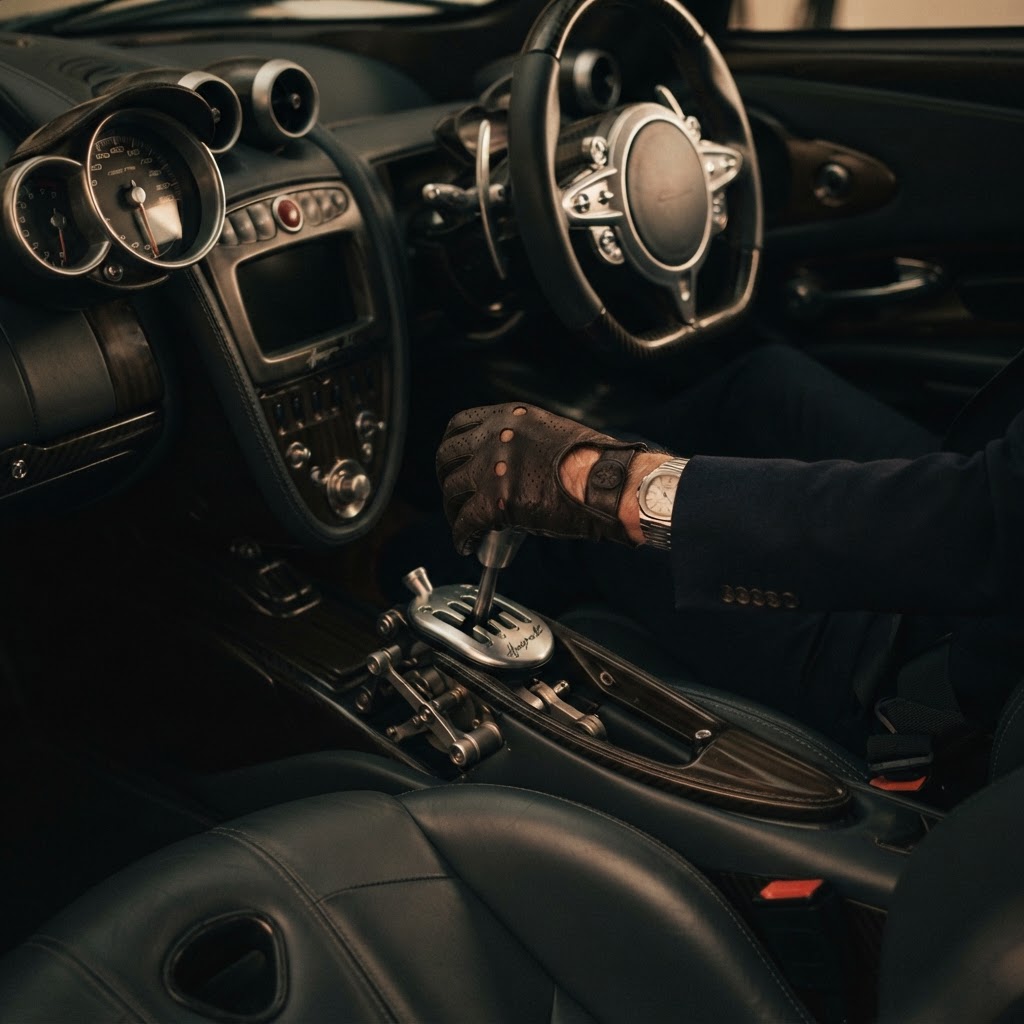
As the automotive industry pivots toward electrification and software-defined architectures, a quiet, profound trend has emerged among the global elite of hypercar collectors. There is a renewed, almost obsessive reverence for the 'analog' hypercar—machines where the connection between driver and road is defined by physics and tactile feedback rather than algorithms and haptic touchscreens. While digital advancements offer convenience, they also introduce a layer of abstraction that many enthusiasts find increasingly discordant with the soul of true performance.
Take, for instance, the Pagani Zonda or the early iterations of the Gordon Murray Automotive T.50. These vehicles are marvels of engineering, yet their appeal lies in the absence of a digital intermediary. When you grasp the milled aluminum gear shifter of a manual-transmission supercar, or feel the slight vibration of a naturally aspirated V12 engine through the chassis, you are participating in a conversation that is entirely transparent. There is no software buffer modulating your inputs. The car does exactly what you demand of it, without the intervention of electronic stability programs that prioritize safety over visceral experience.
Collectors in Vienna, Düsseldorf, and Miami are increasingly seeking out these 'purist' specimens, not merely for their rising investment value, but for the sensory purity they offer. In a world of over-connected environments, a hypercar that refuses to connect to the internet is, ironically, the ultimate luxury. It serves as a sanctuary—a private space where the only data processed is the weight of your right foot and the subtle shift in lateral g-forces during a spirited drive through the Austrian Alps.
Designers like Gordon Murray have tapped into this sentiment by emphasizing lightweight construction and driver-centric ergonomics. By stripping away non-essential screens and digital distractions, they allow the driver to focus exclusively on the mechanics of motion. This design philosophy honors the heritage of motorsport, where the car was an extension of the driver's own nervous system. For the Black Label member, the value of an analog hypercar is found in its honesty. It makes no promises of autonomous capability or over-the-air updates; it promises only to be a faithful, mechanical partner.
As we look toward the future, these analog masterpieces will likely become the 'analog watches' of the automotive world. Just as a mechanical timepiece remains relevant despite the ubiquity of smartwatches, the analog hypercar will continue to be cherished for its permanence and craftsmanship. It represents a mastery of craft that requires no instruction manual, only the innate ability to appreciate the perfect symphony of internal combustion and mechanical intuition. For those who demand the absolute best, the future of driving may well be found in the deliberate, beautiful simplicity of the past.